









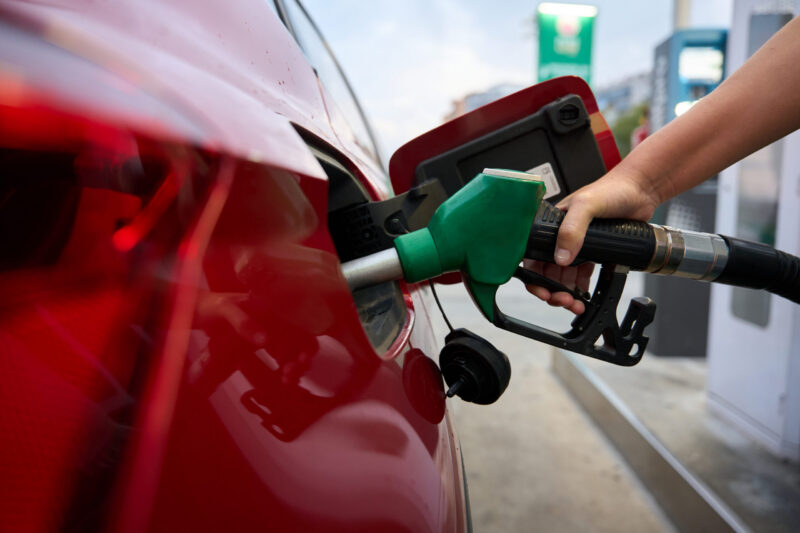
With fuel prices remaining volatile, many Australian businesses are looking for ways to manage increasing operating costs. With the recently announced fuel excise relief not guaranteed to continue past 30 June 2026, one long-standing government measure continues to provide meaningful, legitimate support to fuel intensive businesses, Fuel Tax Credits (FTCs).
Yet in practice, FTCs remain one of the most under-claimed and misunderstood tax concessions.
This article explains how FTCs work, who can access them, and why now is an ideal time for businesses to review their eligibility.
What are FTCs?
FTCs allow eligible businesses to claim back some or all the fuel tax (excise or customs duty) included in the price of fuel used in qualifying business activities. The credit is claimed through the business’ Business Activity Statement (BAS) and provides a direct cash-flow benefit.
FTCs apply to fuel used in activities such as:
- Operating machinery, plant and equipment;
- Using heavy vehicles for eligible purposes;
- Fuel used off public roads or on private roads; or
- Fuel used to power auxiliary equipment (e.g. refrigeration units, concrete mixers)
Why do FTCs matter now?
FTCs are calculated per litre. As fuel prices increase, the dollar value of credits scales up, meaning:
- Errors or under claims can cost businesses thousands of dollars;
- Correct classification of fuel use becomes increasingly important; and
- Record-keeping and apportionment are higher-risk areas for ATO review.
Who can claim?
To be eligible, a business must:
- Be registered for GST;
- Be registered for FTCs;
- Acquire taxable fuel for use in its business; and
- Use that fuel in an eligible business activity.
FTCs are commonly claimed by businesses in:
- Transport and logistics;
- Construction and civil works;
- Agriculture and farming;
- Mining and quarrying;
- Manufacturing and processing; and
- Landscaping and property maintenance.
What fuel use is eligible and what isn’t?
Businesses may be entitled to fuel tax credits where fuel is used in:
- Machinery or equipment, such as generators, pumps, excavators or compressors;
- Heavy vehicles over 4.5 tonnes GVM, including travel on public roads (subject to reduced rates);
- Vehicles (light or heavy) travelling off public roads or on private property; or
- Auxiliary equipment powered by fuel (e.g. PTO driven equipment).
FTCs cannot generally be claimed for:
- Fuel used in light vehicles (≤ 4.5 tonnes GVM) travelling on public roads;
- Fuel for private or domestic use; or
- Fuel where no excise or customs duty has been paid.
Common misconceptions
The amount of FTCs depends on:
- The type of fuel acquired;
- When the fuel was acquired;
- How the fuel was used; or
- Whether the activity attracts a road user charge (for heavy vehicles on public roads).
Fuel tax credit rates are indexed twice yearly (February and August) and subject to change where road user charges are adjusted. Because rates vary, businesses may have more than one FTC rate within a single BAS period.
Businesses often miss out on FTCs due to:
- Assuming fuel used in dual-purpose vehicles is not eligible;
- Incorrectly treating private road use as public road travel;
- Not identifying fuel used in auxiliary equipment;
- Failing to update rates or methods as fuel tax rules change; or
- Never registering for FTCs despite long term eligibility.
Claims generally need to be made within four years from the date the relevant BAS was lodged. This means, if your business meets the eligibility criteria, you may still have time to make a claim.
Next Steps
FTCs remain one of the few direct, ongoing government concessions that reduce fuel related costs for businesses. They are not a temporary relief measure, but a permanent feature of the tax system that can deliver substantial cash-flow benefits when claimed correctly. In the current fuel cost environment, businesses should consider:
- Reviewing whether all eligible fuel uses are being captured;
- Reassessing vehicle classifications and usage;
- Ensuring all current or proposed claims are well supported and documented; and
- Correcting past under claims (where still within time limits).
If fuel is a significant cost for your business, contact your local Moore Australia office today to ensure you are not leaving money on the table when your business needs it most.