









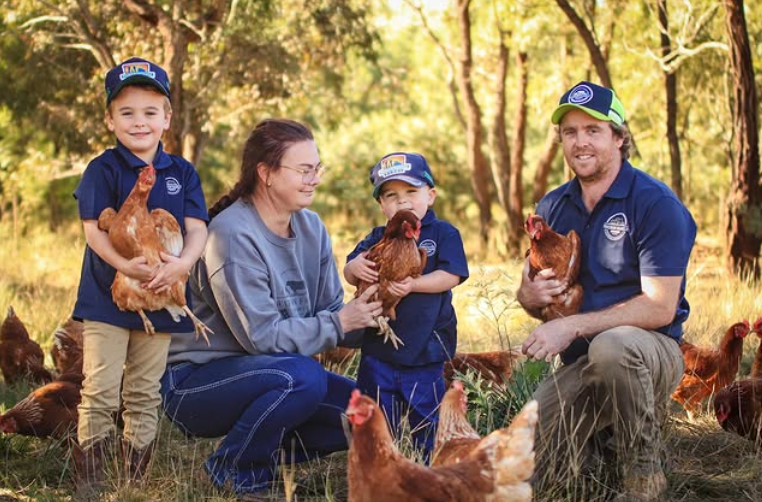
Farming is one of the most rewarding yet unpredictable industries, where success is deeply tied to external factors beyond a farmer’s control. For Matt and Hayley Watson of Watson Family Produce, the challenges were immense, but their story is one of resilience, adaptability, and strategic planning. I’ve been proud to walk alongside them through their journey, providing strategic advisory to help them rebuild and future-proof their farm business.
In my experience working closely with farming families to navigate adversity, I’ve seen firsthand the financial and operational challenges farmers face when recovering from setbacks. The role of business advisory in helping agribusinesses thrive long-term cannot be overstated.
Challenges Farmers Face When Rebuilding
When rebuilding after hardship, such as drought, economic downturns, or natural disasters, farmers face a range of challenges:
- Global Uncertainty: International tariffs, geopolitical tensions, fluctuating commodity prices, and shifting bank policies all create unpredictable market conditions.
- Intergenerational Transfer: Managing the complexities of passing down debt, assets, and responsibilities between generations requires clear planning to avoid conflict and financial strain.
- Environmental Risks: Natural disasters, disease, and climate change impacts on livestock, soil health, and carbon levels require resilient environmental strategies.
- Family Pressures: Personal challenges like loss, divorce, or illness can impact decision-making, mental health, and overall business stability.
How Strategic Advisory Can Make the Difference
Recovery goes beyond financials when working with agribusiness clients – it’s about building resilience for the long term.
- Agronomic, legal, banking and consultant support all play a vital role in a farm’s recovery. It’s important to have the right people at the table to ensure comprehensive support.
- Resilient farm businesses anticipate challenges and plan ahead, rather than just reacting when problems arise
- Resilience is built over time. In prosperous times, attention should be directed toward strengthening the balance sheet. This preparation allows businesses to handle downturns more effectively. During tough times, risk mitigation becomes a top priority, while in times of expansion, the focus should be on filling any intergenerational transfer funding gaps.
- Farming is both a business and a lifestyle. Farm families often face challenges balancing the two, so creating structured separation between work and home life is critical for maintaining mental resilience. This can be achieved by setting up an office space away from the kitchen table, planning off-farm to avoid the daily tasks, and maintaining a structured weekly schedule that allows for mental health time away from work.
Supporting Watson Family Produce

Through a structured advisory approach, the Watsons’ regained stability and began planning for the future. I see my role as stepping in as a partner, without judgment, and guiding them through the recovery process. It wasn’t just about providing financial advice – it was about offering strategic direction, helping them look beyond immediate challenges, and working towards small, achievable milestones that would drive long-term success.
To better understand their journey from the inside, Matt and Hayley have shared their personal thoughts on rebuilding, resilience, and the lessons they’ve learnt along the way. Their insights are not only valuable for other farming families, but they’re also inspiring for anyone navigating hardship.
Your story of rebuilding has been widely shared – what keeps you going when things seem to be at their toughest?
Hayley: “Our ‘dream team’ is what keeps us going! Good relationships with people that are actively in our corner. For us that looks like Clinton, our uncle who is a very successful entrepreneur, and our Farm Owners Academy coaches. There are times when continuing is unclear, or when we question what we should do – having trusted professionals that know you and your business well is really key in guiding clarity on those really tough but so important moments.”
Matt: “The fact that all we went through and the bad that happened was not how our story ended as producers. If we were getting out, it was on our own terms. We also spend as much time working on ourselves as we do on our business – mindset is the key to success.”
What is the big picture?
Hayley: “We are first-generation farmers — building wealth and stability for our children is of utmost importance to us. We want to be able to retire one day without the burden of large debt for our children, without forgoing their childhood in the process.”
Matt: “To build a business that can create generational wealth for our family and leave a lasting legacy that our children and grandchildren will carry on for future generations — even if those future generations never actually meet us.”
How is working with Moore Australia helping you with your farm’s rebuilding journey?
Hayley: “Clinton is one of our nearest and dearest confidants, and we only ‘switched accountants’ months before our salmonella outbreak — the days we refer to as ‘losing it all’. We realised very early on that Clinton was much more than an accountant. He has become a key part of our business and our family. We often joke to other farmers that he has been the glue to the whole show!”
Matt: “Clinton and Moore Australia have been pivotal in us achieving what we have. I do not believe we would have navigated our rebuild so successfully without the constant help and advice we’ve received. It’s more than just accounting — we see it as having another strategic business mentor.”
What financial or business advice has been valuable in helping you navigate the challenges?
Hayley: “The first thing that Clinton said to us was ‘do not stop answering the phone’ — to creditors, to the bank, to everybody. Don’t hide away. That turned out to be significant advice. Having our bank manager on board with our rebuild was really only possible because he knew everything — from when the birds were disposed of, to when we moved off-farm, to how we were re-buying again. That was just the first piece of advice. Support like that came weekly as we worked through everything.”
Matt: “Don’t be scared to ask for help! In ag, especially, there’s a massive fear or limiting belief around being able to ask for help. We all love to help others but struggle to ask for it ourselves. There is so much power in asking unreasonable questions of reasonable people. So get comfortable asking uncomfortable questions — because the answer could alter the course of your business forever.”
Looking back, what do you wish you had known earlier about structuring a farm business for resilience?
Hayley: “Everybody tells you that you should have a buffer, a security fund or an emergency fund — we didn’t. We had some lending we hadn’t yet applied, but that was it. This time around, the first thing we did after paying back everyone who helped us was to build a buffer. We are aiming for 30% of our annual expenses and are about halfway there.”
Matt: “The importance of having a 30% buffer. We now target to hold a reserve equal to 30% of our annual expenses. This allows us to cover three months of expenses if we have a business income interruption. Also, the importance of building out a ‘dream team’ — a group of individuals you trust to help advise on and make the tough decisions. We had completed a risk assessment just months before catastrophe, but having another’s opinion — from someone we trusted — might have helped us see beyond our own expectations.”
What advice would you give to other farming families facing similar challenges?
Hayley: “Reach out to people you trust and respect — now is the time to build a support system. We didn’t have one prior to disaster, and the network we built during recovery is the reason we’re where we are now.”
Matt: “Reach out for help. There are plenty of other farming families out there that have been through, or are going through, what you are. Get to know your numbers so well that you can identify exactly where things aren’t quite right and what’s needed to fix it. Back yourself — a breakthrough is always just on the other side of a breakdown.”
What does resilience mean to you now, after everything you’ve been through?
Matt: “Resilience is so much more than just never giving up and getting the job done. It’s in exactly how you show up day in, day out — and all the little things you do. It’s the things you say to yourself when no one else is around that will ultimately determine if you succeed or fail. It’s being able to ask the questions you don’t already have answers to. It’s being a role model for the people watching your every move and learning from both your words and actions.”
What does life look like in 10 years’ time?
Hayley: “We are working on a freedom farm — a farm that we can work in without the survival feelings day to day, and one that serves our family’s financial goals. We are hoping to achieve this within three years, and then we’ll plan again!”
Matt: “We have a business that works for us — it’s under management and we are free to explore new investment opportunities and live life on our terms.”
Lessons for Other Agribusinesses
From the Watsons’ journey, several key lessons can be applied to other agribusinesses facing similar hardships:
- Time heals the balance sheet: Land and assets appreciate over time, so resilience is built by addressing financial challenges early and focusing on long-term value.
- Prioritise personal health: Taking care of family and personal well-being first allows you to maintain the mental and physical strength needed to tackle business challenges.
- Set realistic expectations: Manage your resources and commitments effectively and be prepared to put in the necessary effort to achieve your long-term goals.
Building a resilient farm business isn’t just about financial recovery – it’s about ensuring long-term sustainability. With the right financial structures, succession planning, and holistic decision-making, farmers can not only survive but thrive.
Role of Strategic Advisory in Long-Term Agribusiness Success
Strategic advisory plays a crucial role in helping agribusinesses remain sustainable and profitable. While 95% of clients come to us seeking holistic advice rather than just compliance, we focus on balancing the needs of people, the environment, and profitability.
In the rush to meet deadlines, it’s easy for critical long-term planning to be overlooked. Many so-called advisors can miss the bigger picture and focus only on short-term fixes. Our role is to ensure that the important matters are attended to, not just the urgent ones.)
For farmers looking to strengthen their businesses for the future, Moore Australia provides holistic advisory services that go beyond compliance. Our team helps agribusinesses navigate challenges, mitigate risks, and position themselves for long-term growth.